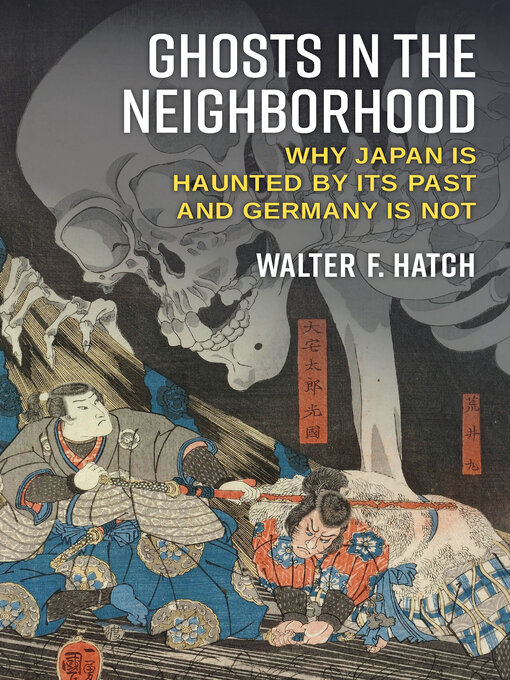
Germany, which brutalized its neighbors in Europe for centuries, has mostly escaped the ghosts of the past, while Japan remains haunted in Asia. The most common explanation for this difference is that Germany knows better how to apologize; Japan is viewed as "impenitent." Walter F. Hatch rejects the conventional wisdom and argues that Germany has achieved reconciliation with neighbors by showing that it can be a trustworthy partner in regional institutions like the European Union and NATO; Japan has never been given that opportunity (by its dominant partner, the U.S.) to demonstrate such an ability to cooperate. This book rigorously defends the argument that political cooperation—not discourse or economic exchange—best explains Germany's relative success and Japan's relative failure in achieving reconciliation with neighbors brutalized by each regional power in the past. It uses paired case studies (Germany-France and Japan-South Korea; Germany-Poland and Japan-China) to gauge the effect of these competing variables on public opinion over time. With numerous charts, each of the four empirical chapters illustrates the powerful causal relationship between institution building and interstate reconciliation.
- Available now
- New eBook additions
- Travel Guides
- Let Your Garden Grow
- New kids additions
- New teen additions
- Most popular
- Try something different
- Series Starters
- Available Now Ebooks
- Homeschool Resources
- Workbooks for K-8
- Hispanic Heritage
- See all ebooks collections
- Always Available Audio Fiction
- Always Available Audio Nonfiction
- Always Available Audio Romance
- Great Courses
- Pimsleur Language Learning
- Where Have I Heard That Voice Before?
- Listening to Nature
- Available now
- New audiobook additions
- Great Narrators
- Audiobooks for your Commute
- Listen While You Work
- New kids additions
- See all audiobooks collections